
The main advantages of a green roof are better rainwater control, modest extra insulation, a longer-lasting waterproof layer, and a habitat for wildlife. The main disadvantages are higher upfront cost, added weight, ongoing maintenance, and more difficult leak tracing. A green roof suits a sound flat roof whose structure can carry the added load.
A flat roof on an extension or garage is easy to ignore. It sits there, collects leaves, and gets a look only when something leaks. Turning it into a living green roof changes that, and it raises a fair question: is the effort worth it?
This guide weighs both sides so you can decide whether a green roof earns its place on your building.

What Is a Green Roof?
A green roof is a roof deliberately covered in growing plants. Some people call it a living roof or a planted roof. Whatever the name, it is a layered system, not just soil spread on top.
Extensive and intensive green roofs
An extensive green roof uses a thin layer of substrate and tough plants, usually sedum. It is light and lower-effort, and a sedum green roof is the version most homeowners picture.
An intensive green roof is a proper roof garden with deep substrate, lawns, shrubs and sometimes trees. It needs a much stronger structure and far more care.
The layers underneath
A typical green roof build-up looks like this, from the bottom up:
- The roof deck
- The waterproof membrane, often EPDM (synthetic rubber), GRP (fibreglass) or felt, on a root-resistant system
- A protection layer
- A drainage layer to carry excess water away
- A filter fleece that keeps fine soil out of the drainage
- The growing medium (the substrate)
- The planting

Green Roof Advantages
These are the benefits that matter most in the UK.
Rainwater control
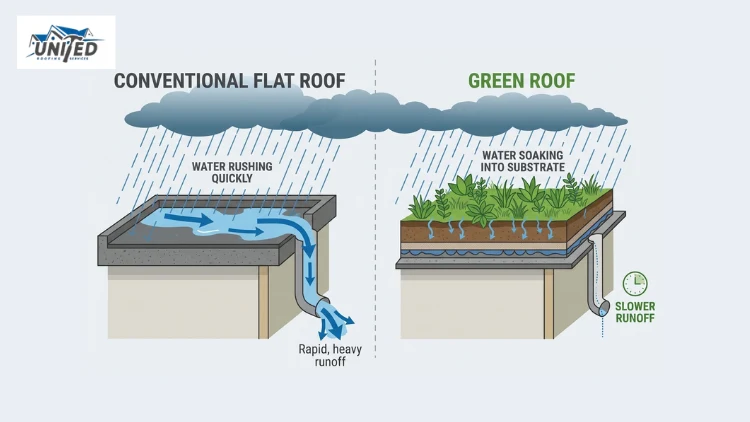
A conventional roof sends rain straight into the drains. A green roof soaks up part of it and releases the rest slowly. That takes pressure off the drainage network during storms, which helps in towns where hard surfaces cover most of the ground.
How much water a roof holds depends on the substrate depth and the planting. A thin sedum roof helps with typical showers, but it will not stop heavy downpours from running off.
Insulation and energy use
Plants and soil shade the roof surface and cool the air above it through evapotranspiration, the process of water evaporating from leaves. In summer, that keeps the roof cooler. In winter, the layers help retain some warmth. Across built-up areas, many cooler roofs also help reduce the urban heat island effect.
One limit to keep in mind: a green roof is a useful extra layer, not a replacement for proper roof insulation. Energy savings vary from building to building.
A longer-lasting waterproof layer
The membrane under a green roof is shielded from sunshine, frost, and sharp temperature swings, which age a normal flat roof fastest. Industry sources often suggest this can significantly extend the membrane’s working life. Treat that as an estimate, because the result depends on the design and how well the roof is looked after.
Wildlife and air quality
A green roof gives bees, butterflies, and hoverflies somewhere to feed in areas with little greenery. Plain sedum is not the richest option. Buglife, the invertebrate conservation charity, says biodiverse roofs with mixed wildflowers and varied habitats support wildlife better, and its London living roofs project names the rare black redstart as a bird that can benefit.
Leaves and soil also trap some dust and airborne pollutants. One small roof’s effect is modest, but it adds up when many roofs go green.

Sound reduction
Soil and foliage soak up noise rather than bouncing it back. A deeper substrate layer absorbs more, so the benefit is most noticeable beside busy roads or noisy neighbours.
Planning credentials and property appeal
For new developments, a green roof can help meet biodiversity and urban greening requirements, such as Biodiversity Net Gain and the Urban Greening Factor in the London Plan. Commercial buildings can also earn BREEAM credit, the sustainability rating used for non-domestic buildings.
For a typical home extension, the reward is simpler: a green roof looks better than bare bitumen or gravel, which many owners count as a plus when the roof is visible from upstairs windows.
Disadvantages of a Green Roof
None of these should automatically put you off, but you should look closely at each one before you commit.
Upfront cost
A green roof has more layers, more labour and the planting itself, so it costs more to install than a standard flat roof in EPDM, GRP or felt. Any energy savings or longer-lasting membrane benefits arrive slowly and are hard to guarantee. Budget for the whole system, not just the plants.
Extra weight and structural checks
Soil and plants are heavy, and saturated substrate is heavier still. A structural engineer should check every roof before work starts, especially in older buildings or on lightweight timber decks. An intensive roof garden asks far more of the structure than an extensive sedum roof.
The Green Roof Organisation (GRO), an independent not-for-profit trade association for the UK industry, publishes the GRO Green Roof Code of Best Practice covering design, installation and maintenance.
Maintenance
A green roof is lower maintenance, not no maintenance. Expect seasonal visits to:
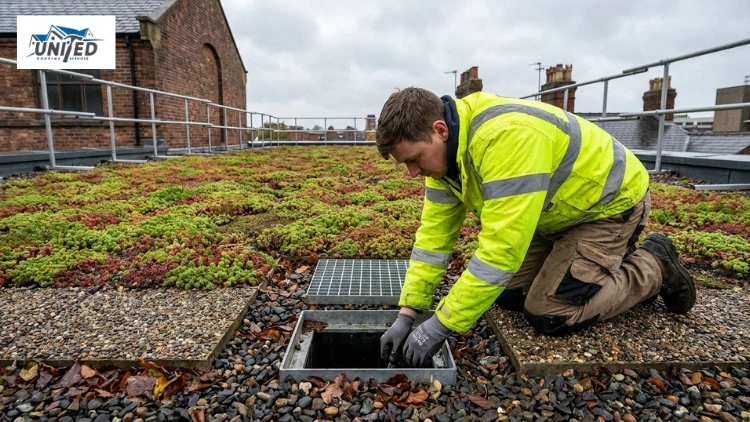
- Clear leaves and debris from the outlets
- Pull out weeds that seed in
- Water new planting during long dry spells
The routine echoes the checks in our flat roof maintenance tips, with planting as extra work.
Leaks are harder to trace
On a bare flat roof, you can see the membrane and follow a leak to its source. Under a green roof, the membrane is buried beneath layers of substrate and planting, so finding the fault can mean specialist leak detection and lifting part of the system. Any good roof repair starts by finding the root cause of a leak. On a green roof, that step takes longer and costs more.
Drainage and waterlogging
Plants dislike sitting in water, and so do roofs. Poor falls or poorly detailed outlets can leave the substrate waterlogged, drowning the planting and adding load to the structure. Good drainage detailing is not optional.
Fire and access rules
Dried-out vegetation can become a fire risk in a hot spell. Well-designed roofs include non-combustible breaks, such as gravel strips, and safe access routes for maintenance crews. Plan both from the start, not as an afterthought.
Is a Green Roof Right for Your Roof?
Not every roof is a good candidate. Use this as a rough guide:
| Roof type | Fit | What to check |
|---|---|---|
| Flat roof on an extension | Often good | Structure, falls and drainage outlets |
| Garage or outbuilding | Possible | A lightweight system, and whether the structure can carry it |
| Pitched roof | Harder | Steeper slopes need extra measures to hold the layers in place |
| Old flat roof | Fix first | Renew a tired membrane before adding anything on top |
| Commercial flat roof | Strong fit | Load, access and the building’s sustainability goals |

If any answer is no, a conventional flat roof system is usually the simpler choice. The NFRC (National Federation of Roofing Contractors) is a good place to find a competent roofer for specialist work.
Thinking About a Flat Roof Upgrade?
At United Roofing Services Ltd, we install and repair flat roofs in EPDM, GRP and felt across Richmond and the surrounding areas. If you’re weighing a green roof, we can inspect your existing roof, tell you plainly what condition it’s in, and say whether a conventional system might serve you better.
Explore our flat roofing services or contact us for a free, no-obligation look.
Frequently Asked Questions
Can you walk on a green roof?
Not on a typical extensive sedum roof. They’re built for plants, not foot traffic, and treading on them damages the planting. An intensive roof garden is designed for foot traffic, with paths and proper access.
Do green roofs need planning permission?
It depends on the property and the project. Adding a green roof to an existing flat roof often doesn’t need permission if the building’s outside appearance barely changes, but a new extension, a listed building, or a conservation area can bring extra rules. Building Regulations may also apply to structure and fire safety. Check with your local planning authority before you start.
Can solar panels go on a green roof?
Yes. This combination is called a biosolar roof, and the Green Roof Organisation publishes design guidance. Keep the planting low and clear of the panels, and the cooler surface can help the panels run efficiently.
Do green roofs attract pests?
Mostly, they attract helpful visitors such as bees, hoverflies and birds. Pest problems are uncommon, but overgrown plants or built-up debris can shelter slugs and ants, and in some areas gulls nest on flat roofs. Regular upkeep keeps these issues down.
Can I fit a green roof on a leasehold flat?
You will almost certainly need permission. In many converted properties, the roof is shared, so the freeholder or management company must agree before any structural changes. Check your lease first.
