
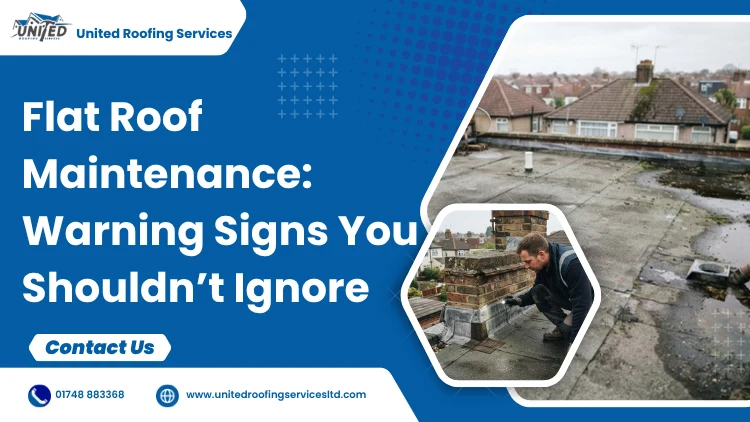
If you own a property in Richmond or the surrounding areas, you’ve likely dealt with a flat roof at some point, whether it’s on an extension, a garage, or the whole building. Flat roofs are practical, cost-effective, and suit many modern homes. But they don’t handle neglect well.
Unlike pitched roofs, flat roofs don’t shed water quickly. That means small issues can turn into big, expensive ones if they go unnoticed. The good news is that most flat roof problems give warning signs long before they become emergencies. Good flat roof maintenance tips come down to knowing what to look for and how often to check.
What This Guide Covers
- Quick maintenance tips you can act on straight away
- How often to inspect your flat roof
- The warning signs of a leak, inside and out
- A step-by-step inspection checklist
- Maintenance advice by roof material
- When it’s time to replace rather than repair
- When to bring in a professional
Flat Roof Maintenance Tips Full Guide:
If you only remember a handful of things, make it these. They prevent the majority of flat roof problems we’re called out to fix:
- Keep drains and outlets clear so water can always escape
- Remove leaves, moss, and debris regularly before they trap moisture
- Address ponding water early; standing water is the number one cause of premature failure
- Trim overhanging branches to reduce debris and damage from falling limbs
- Avoid walking on the membrane unless you have to, and never in one repeated spot
- Inspect after every storm, not just on a schedule
- Reseal or recoat at the interval recommended for your roof’s material
The rest of this guide breaks each of these down in more detail.
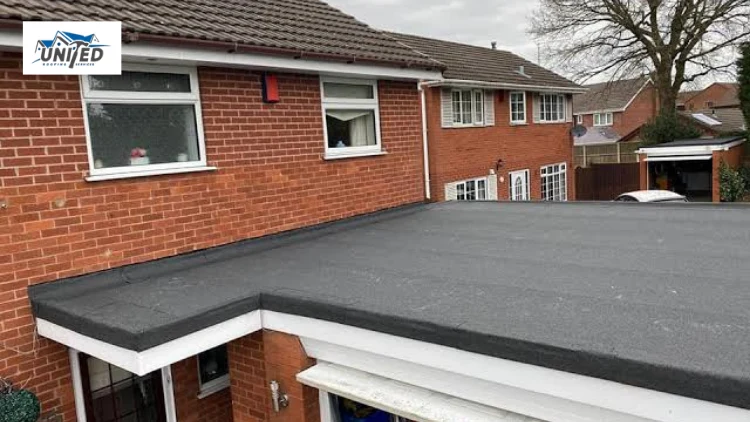
How Often Should You Inspect a Flat Roof?
As a general rule, inspect your flat roof twice a year in spring and autumn, plus after any severe weather. This is one of the most common questions we get asked, and it’s a fair one. Most homeowners don’t think about a flat roof until there’s a problem, but a bit of routine attention goes a long way.
In practice, that means:
- Inspect your roof twice a year, ideally in spring and autumn
- Check again after any severe weather, such as heavy storms, high winds, or prolonged rain
- Do a quick visual check every couple of months, if you can access the roof safely
This lines up with guidance from the National Federation of Roofing Contractors, which recommends a twice-yearly check, typically in March and November. Spring inspections help catch any damage left over from winter, while an autumn check ensures the roof is ready for the colder months ahead. If you’re not comfortable getting up there yourself, our team can handle it as part of our wider roofing services in Richmond.
Signs Your Flat Roof Is Leaking
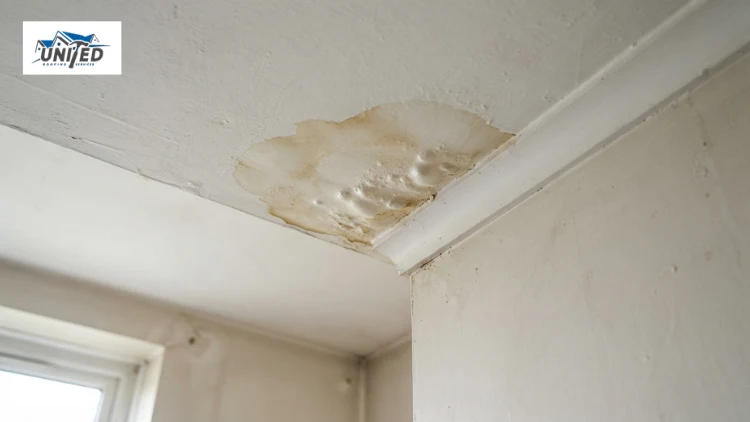
The earliest signs of a flat roof leak usually show up indoors as staining, damp, or a musty smell, often some distance from the actual damage. Water rarely enters directly above the fault you can see. It often travels sideways along joists or insulation before finding its way through, which is why spotting the early signs matters as much as understanding the causes.
Inside Your Property
Watch for:
- Brown or yellow staining spreading across a ceiling
- Damp patches that feel cold or wet to the touch, particularly after rainfall
- Paint or wallpaper starting to bubble or peel
- A musty, damp smell in the room below the roof
- Visible dripping through the ceiling, usually a sign the problem has been developing for a while
Outside on the Roof
Up on the roof itself, the warning signs come down to a handful of things:
- Standing water that lingers more than 48 hours after rain
- A damaged membrane: cracks, blisters, splits, or brittle patches
- Loose or lifting flashing around walls, vents, and skylights
- Moss, leaves, and debris building up and holding moisture against the surface
You can work through all of these methodically using the checklist below.
Flat Roof Inspection Checklist
Many of these signs trace back to the same handful of underlying causes, from ponding water to a worn membrane. Our guide to what causes flat roof leaks breaks each one down in more detail. If you’d rather work through things step by step, run through this simple checklist each time you inspect the roof:
Work through each point in order. Photograph anything unusual so you can track changes between inspections.
- Check for standing water that hasn’t drained within 48 hours
- Look for cracks, blisters, or splits in the membrane
- Inspect flashing around walls, vents, and skylights for lifting or gaps
- Clear leaves, moss, and debris from the roof surface
- Check that gutters and drainage outlets are flowing freely
- Check indoors for the signs covered above
- Note the age of the roof and the material it’s made from
Flat Roof Maintenance by Material Type
How much upkeep your roof needs depends largely on what it’s made from, so it’s worth knowing which of the three main materials you have before you inspect. Not all flat roofs need the same level of attention.
- Felt roofing: The most affordable option, but also the most prone to cracking and blistering over time. Check seams and edges closely during each inspection, since problems usually start there.
- EPDM rubber: Generally low-maintenance and resistant to UV damage, but check seams and any glued joints for lifting or separation.
- GRP fibreglass: Very durable and largely maintenance-free once installed correctly, but keep drainage points clear, since ponding is the main risk with this material.
If you’re not sure which material your roof uses, or you’re weighing up options for a future replacement, our guide to roofing materials covers the pros, cons, and typical lifespan of each in more detail.
Signs Your Roof Needs Replacing Rather Than Repairing
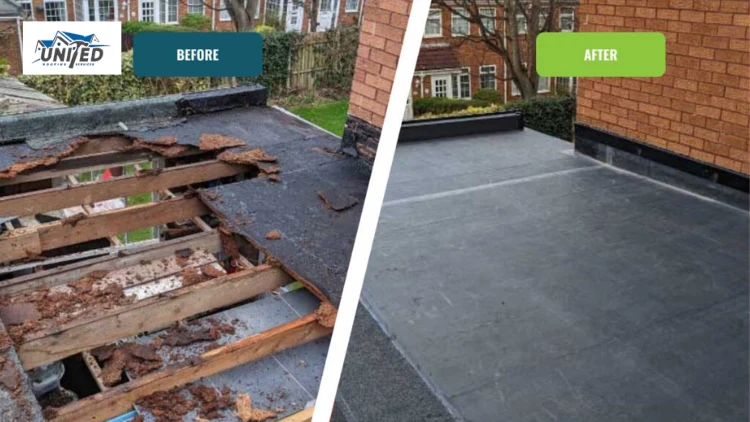
Replacement usually makes more sense than repair once a roof is past its lifespan or leaking in several places at once. Not every leak is worth patching; sometimes repair costs stack up faster than they should, and that’s usually a sign the roof is at the end of its working life.
Here are the clearest signs your roof needs replacing:
- The roof is at or beyond its expected lifespan: roughly 10 to 15 years for traditional felt, 20 to 25 for EPDM, and 25 to 30 for GRP fibreglass
- Leaks are appearing in multiple, unrelated areas rather than one isolated spot
- The membrane is visibly cracked, brittle, or degraded across large sections rather than in one small patch
- You’ve already had two or more repairs on the same roof in the past year or two
- There’s soft decking or structural timber damage beneath the surface
If your roof’s age is the main concern, our guide to how long a roof lasts breaks down realistic lifespans by material in more detail.
When to Call a Professional Roofer
Some checks are fine to do from the ground or with a stable ladder. But anything involving getting onto the roof itself, assessing structural damage, or diagnosing the source of a leak is best left to a professional. It’s safer, and it helps ensure the problem is identified properly the first time.
At United Roofing Services Ltd, we’ve been carrying out flat roof inspections and repairs across Richmond, Twickenham, Kingston upon Thames, Esher, and Surbiton for over 45 years, covering everything from small patch repairs to complete flat roofing services. If any of the signs above sound familiar, it’s worth getting a second opinion before the problem grows, rather than waiting until it becomes a bigger repair job.
Get in touch with our team today to book a flat roof inspection and get honest, straightforward advice on the best way forward.
Frequently Asked Questions
How can ponding be prevented on a flat roof?
Make sure the roof has the correct fall so water drains away, keep gutters and outlets clear, and fix any dips or sagging early before they start to collect water.
Should I avoid buying a house with a flat roof?
Not necessarily. A well-installed, well-maintained flat roof is perfectly reliable. Get a proper inspection before you buy so you know its age, material, and condition.
Is flat roof maintenance expensive?
No, routine maintenance is fairly cheap, mostly clearing debris and the occasional small repair. Neglect is what makes it expensive, since small issues left unchecked can turn into full leaks or replacements.
What is the best waterproof roof coating?
It depends on your existing membrane and budget. Liquid GRP and acrylic coatings are common choices, but the right one should match your specific roof type, so it’s worth getting a professional recommendation rather than guessing.
