

Spotting a damp patch spreading across your ceiling can make anyone’s stomach drop. The good news is that a leaking flat roof rarely means you need to tear it all off and start again. Most leaks begin as one small, identifiable weak point, and if you catch it early, fixing it is often far simpler and cheaper than homeowners expect.
This guide walks through what causes flat roof leaks, how to spot one before it does real damage, what you can safely do yourself, and when it’s time to bring in a professional.
Common Causes of Flat Roof Leaks
Understanding the root cause matters more than patching the symptom. Here are the common causes of flat roof leaks that keep coming up on inspections across Richmond and the surrounding areas.
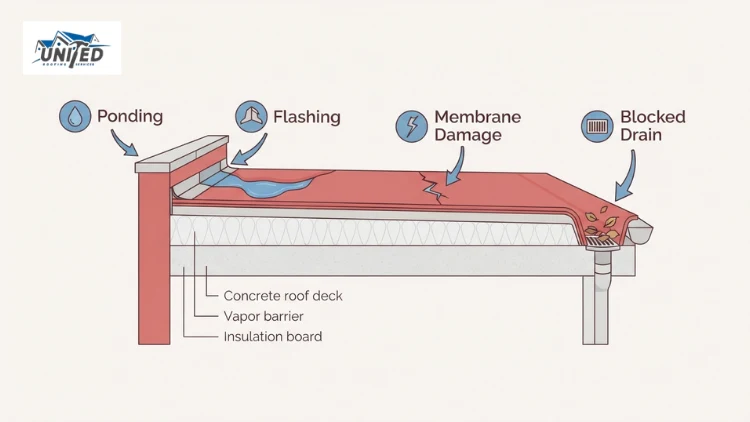
Ponding (Standing Water)
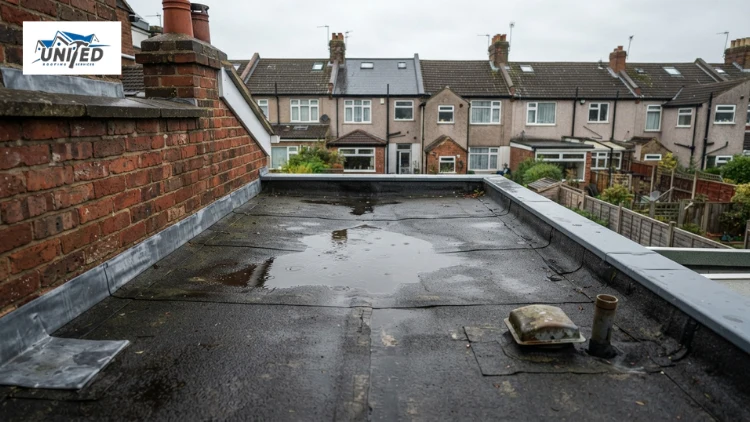
Flat roofs aren’t actually flat. They’re built with a very slight fall so rainwater drains away rather than sitting on the surface. If that fall is too shallow, or the roof has settled unevenly over the years, water collects in low spots instead of running off.
Water left sitting for more than 48 hours after rain starts to break down the membrane. It adds constant weight, encourages algae growth, and in winter it can freeze and expand, cracking the surface beneath it.
Damaged or Failed Flashing
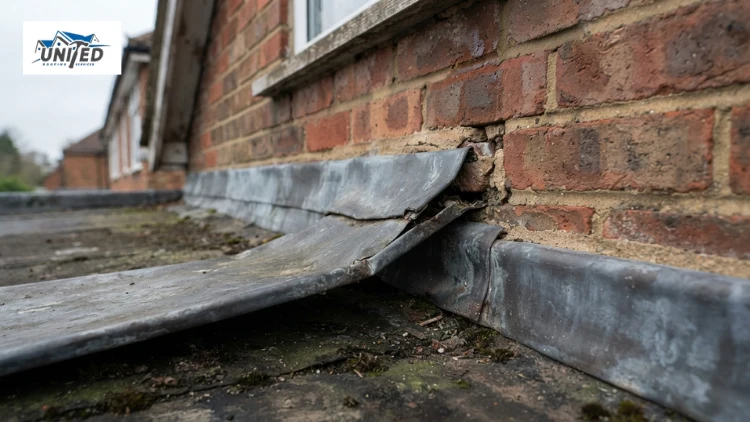
Flashing is a strip of lead or membrane that seals the joint where your flat roof meets a wall, chimney, or parapet. It takes the brunt of thermal movement, expanding and contracting with every hot and cold spell.
Over years, this constant flexing loosens the seal, and gaps open up exactly where two surfaces meet, which happens to be one of the most common entry points for water.
Cracked, Blistered or Worn Membrane
Whether your roof is felt, EPDM rubber, or GRP fibreglass, the membrane itself has a limited lifespan. UV exposure and temperature swings gradually make it brittle.
Blisters often start as small raised bubbles where moisture or air gets trapped beneath the surface. Left alone, these eventually split and let water straight through.
Blocked Gutters and Drains
This cause gets overlooked constantly, yet it’s one of the easiest to prevent. Leaves, moss, and general debris build up in gutters and roof outlets, especially through autumn.
Once drainage is blocked, water has nowhere to go but back onto the roof surface, quickly turning a well-built roof into one with chronic ponding problems.
Poor Original Installation
Not every flat roof problem develops with age. Sometimes the roof was never installed correctly in the first place, whether that’s inadequate membrane overlap at the seams, an incorrect fall, or materials that simply weren’t right for the job.
Insurance data consistently shows that flat roofs installed by unqualified contractors tend to develop leaks within the first two years, long before age should reasonably matter.
How Do You Fix a Roof Leak?
Fixing a roof leak properly starts with tracking down where the water is actually getting in, not just where it shows up inside.
Finding the Source First
Wait for a dry spell of at least two or three days before inspecting the roof, since a wet surface makes it far harder to spot cracks and weak points. Check the obvious areas first: flashing, seams, and anywhere pipes or vents pass through the membrane.
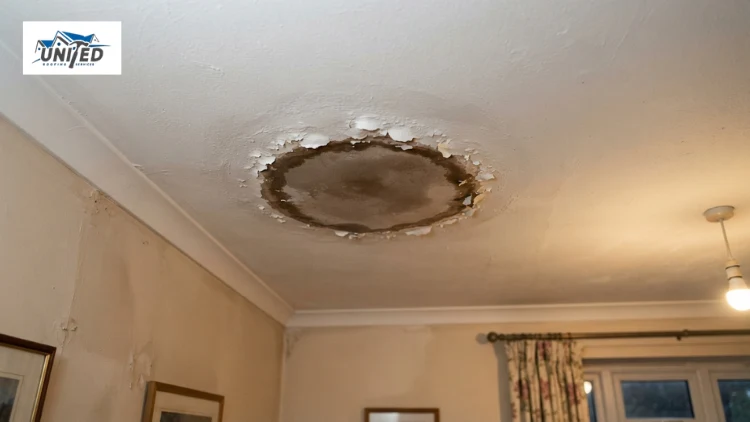
Inside, note exactly where the staining or dripping appears and measure the distance from the nearest external wall. This helps narrow down the likely area to check once you’re on the roof.
Fixing a Leak on a Flat Roof From the Outside
For a small, clearly identified puncture or crack, a temporary repair can buy you time until you carry out proper work.
- Clean the damaged area thoroughly, removing dirt, moss, and any loose material.
- Make sure the surface is completely dry before applying anything
- Trim away any loose or blistered membrane around the damage
- Apply a roofing-grade sealant or repair patch suited to your membrane type, extending it well beyond the edges of the damage
This is genuinely useful for fixing a leak on a flat roof as a stopgap, but it’s worth being honest about the limits. A patch addresses the symptom, not necessarily the cause, and working at height on a wet or icy roof carries real risk. Treat any DIY fix as buying time, not a permanent solution.
When to Call a Professional Instead
Some situations are best left to a qualified roofer from the start:
- Water is entering at more than one point
- The roof feels soft or spongy underfoot, suggesting the deck beneath may be damaged
- You can’t clearly identify where the water is coming in
- The roof is already close to or past its expected lifespan
- A previous patch repair hasn’t actually solved the problem
If any of these apply, our flat roofing team can properly assess the damage and recommend a fix that lasts, rather than one that needs revisiting every few months.
Why Flat Roofs Leak More in Heavy Rain
A roof that’s coped fine for years can suddenly start leaking the moment a proper downpour hits, and there’s a straightforward reason for that.
Flat roofs leak in heavy rain because sustained, heavy rainfall overwhelms weaknesses that drizzle never stresses. A small crack or worn seam might shed a bit of moisture in normal conditions without ever showing signs inside your home. Under sustained heavy rain, though, water has far more time and volume to find its way through the same weak point.
Wind-driven rain adds another layer. During a proper storm, rain doesn’t just fall straight down; it gets pushed sideways into flashing joints and upstands that ordinary weather rarely tests. That sideways pressure often exposes a seal that’s been quietly weakening for years without ever causing a problem before.
How to Prevent Future Flat Roof Leaks
A bit of regular attention goes a long way toward avoiding another leak down the line.
| Prevention Tip | What to Do | Why It Matters |
|---|---|---|
| Keep drainage clear | Clear leaves, moss, and general buildup from gutters and drains at least every few months, more often near overhanging trees. | Blocked drainage is one of the most common causes of ponding and slow leaks. |
| Inspect after severe weather | Check the roof following a storm or prolonged heavy rain. | Catches new damage before it has a chance to spread. |
| Deal with small issues immediately | Repair a minor crack or lifted flashing as soon as you spot it. | A five-minute fix today avoids a much bigger job in six months. |
| Book a professional inspection annually | Schedule a yearly check with a qualified roofer. | A trained eye spots early warning signs that are easy to miss from ground level. |
| Watch for moss | Treat moss growth early, particularly in shaded or damp-prone areas. See our guide to removing moss for the safest method. | Moss holds moisture against the surface and can work its way into small gaps over time. |
How United Roofing Services Fixes Flat Roof Leaking in Richmond
United Roofing Services has spent over 25 years tracing and fixing exactly this kind of problem across Richmond, Twickenham, Esher, and Surbiton. Every job starts with a proper inspection, not a guess, so you know whether you’re looking at a small repair or something more serious before we start.
We work with felt, EPDM rubber, and GRP fibreglass, and we provide a fixed quote in writing before we start, with no vague estimates or surprise add-ons later. As a Checkatrade-approved, fully insured team, we’re used to solving leaks that other repairs haven’t managed to fix permanently.
If damp has already started spreading into the property, our damp proofing service can address the internal damage at the same time, so you’re not left chasing two separate contractors for one problem.
Worried about a leak right now? Get in touch for a free, no-obligation assessment.
Frequently Asked Questions
Can a flat roof leak be fixed without replacing the whole roof?
Yes, in most cases. Small, clearly identified leaks caused by a single crack, blister, or flashing gap can usually be repaired without replacing the entire roof, as long as the underlying deck hasn’t been damaged.
How long does a flat roof repair take?
A straightforward patch repair typically takes a few hours. Larger repairs involving flashing replacement or membrane overlays can take a day or two, depending on the roof’s size and condition.
Is it normal for a flat roof to have some standing water?
Yes, if a small amount clears within 24 to 48 hours after rainfall, it’s generally fine. If water is still sitting after that, it suggests a drainage or fall issue worth having checked.
Can I repair a flat roof myself?
A confident homeowner can sometimes temporarily patch small, well-identified punctures. However, DIY fixes are rarely permanent, working at height carries real risk, and repairs can void any existing roof warranty, so treat any DIY work as a short-term measure only.
Will home insurance cover a leaking flat roof?
Most policies cover sudden, unexpected damage such as storm damage, but they usually exclude general wear and tear or lack of maintenance. Check your specific policy and report any leak as soon as you notice it.
How often should a flat roof be inspected?
A visual check from ground level every six months, plus a professional inspection once a year, catches most problems while they’re still small and inexpensive to fix.
Technical guidance draws on industry standards published by the NFRC and long-term rainfall data from the Met Office.

Pingback: Flat Roof Maintenance Tips for Richmond Homeowners (2026)