
Moss loves Richmond’s damp, leafy, tree-lined streets, so a green roof is one of the most common questions we get asked. A little moss is mostly cosmetic, but left to thicken, it can lift tiles, block gutters, and hold water against your roof until it causes real damage. The good news is that getting rid of it safely is straightforward once you know the right method, and the wrong method can cost you a fortune. Here’s how to do it properly.
How to Get Rid of Moss on Your Roof
The safest way to remove moss from your roof is to treat it with a biocide, let it die off and wash away naturally, then take steps to stop it from coming back. In short:
- Apply a roof biocide (spray-and-leave): This kills the moss, algae, and lichen at the root. Over 4–12 weeks, the dead moss dries out and washes off in the rain, with no scrubbing.
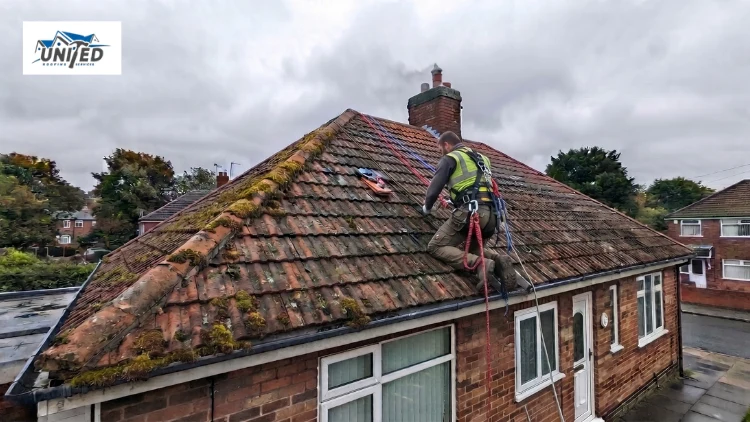
- Gently remove heavy moss by hand if needed: A roofer uses a soft-bristled brush, working top to bottom from a roof ladder or scaffold, never a wire brush.
- Never pressure wash your roof: It cracks tiles, strips their surface, and forces water underneath.
- Prevent regrowth: Fit zinc or copper strips, keep gutters clear, and cut back overhanging trees.
| Method | Safe to use? | Best for |
|---|---|---|
| Biocide / spray-and-leave treatment | ✔ Yes | All tile and slate roofs |
| Gentle manual removal (soft brush) | ✔ Yes, by a roofer | Thick, established moss |
| Pressure washing | ✘ Never | Nothing; it damages the roof |
Is moss actually bad for your roof?
It can be. A thin covering is largely cosmetic, but thick moss on roof tiles holds moisture against the surface like a sponge, and that trapped water is where the trouble begins. In winter, it freezes and expands, cracking tiles and loosening their fixings. As the moss thickens, it lifts tile and slate edges, letting water get underneath to the underlay, battens, and timbers. It also blocks gutters and valleys, causing overflow and damp walls. Caught early, moss removal is a quick and inexpensive job; ignored, it can lead to leaks and structural repairs costing thousands of pounds.
Does moss on the roof cause leaks?
Yes, thick moss can. As it builds up, it lifts the edges of tiles and slates and lets rainwater track underneath the covering. From there, the water reaches the underlay, battens, and timbers, and eventually appears as a leak or damp patch indoors. Moss also blocks gutters and valleys, so water overflows onto the walls. This is why treating moss early is far cheaper than the repairs a leak brings.
Does moss affect slate and clay roofs differently?
Yes. The material beneath the moss changes both how much harm it does and how carefully you must remove it. Clay tiles are among the most vulnerable, because moss accelerates the surface weathering that makes them porous. Natural slate, common on Richmond’s period homes, is brittle and cracks easily, so clean it only by hand with soft tools from proper access. Weathered concrete tiles give moss an easy foothold, whereas metal roofs are the least affected but still require a metal-safe treatment. Knowing your covering helps you choose the right approach.
So why is your roof covered in moss?
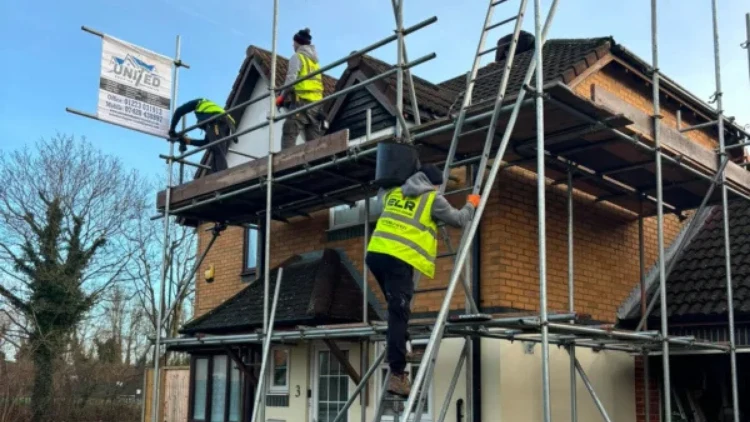
Moss needs three things: damp, shade, and a surface to cling to. Richmond offers all three, thanks to its mature trees, leafy streets, and damp air off the Thames. North-facing slopes and shaded roofs stay wet longest, so two or three houses on a street go green while the rest stay clear. Older, porous surfaces such as weathered concrete tiles and natural slate give moss an easy grip.
Can you just blast it off with a pressure washer?
No, and it is the single most expensive mistake homeowners make. Pressure washing a roof cracks and dislodges tiles, strips away the protective surface coating, and forces water beneath the covering, which frequently causes leaks. It also voids many tile guarantees. Most roofers and tile manufacturers strongly advise against it. A biocide roof treatment delivers better results with less risk.
What’s the best moss killer for a roof?
The most effective option is a purpose-made roof biocide, a liquid fungicide and algaecide that kills moss, algae, lichen, and spores at a chemical level. Many products also leave a residual inhibitor that discourages regrowth for several months afterwards. Avoid ordinary household bleach, which corrodes metal flashings, damages tiles, and produces run-off that harms nearby plants and lawns. A roof-safe biocide, applied on a dry, overcast day, delivers a thorough result without endangering the roof or the surrounding garden.
How long does a roof biocide take to work?
A spray-and-leave biocide kills the moss within a few days, but the dead growth then takes around four to twelve weeks to dry out and wash off naturally in the rain. You don’t need to scrub or rinse it away. Many treatments also leave a residual inhibitor that slows regrowth for several months afterwards.
Should you remove roof moss yourself or call a roofer?
For a small patch you can reach safely from the ground with a sprayer, a DIY biocide is fine. Anything at roof level is a job for a professional. Never walk on a moss-covered roof, as it is extremely slippery, and never scrape from a ladder. Slate in particular is brittle and needs gentle hand tools used from proper access. A roofer brings the right safety equipment, removes the moss without damaging the roof, and can repair anything the moss has already loosened.
How do professionals remove moss from a roof?
A professional roofer usually begins by applying a roof biocide, then gently clears any heavy growth by hand with a soft-bristled brush, working safely from a roof ladder or scaffold. They also clear the gutters and valleys, check for tiles that the moss has loosened, and finish with a treatment to slow regrowth. This approach removes moss without damaging the roof.
Does removing moss damage roof tiles?
Done correctly, no. Gentle hand removal and biocide treatment are safe for both tiles and slate. Damage occurs when the wrong method is used, particularly pressure washing or wire brushes, or when someone walks on brittle slate. That’s why careful, low-impact removal by an experienced roofer is the safest choice.
What does professional moss removal cost?
A professional biocide treatment typically costs around £150–£400 for a semi-detached home, with larger or harder-to-access roofs costing more because they require scaffolding or a cherry-picker. Full roof cleaning across a larger property can cost more. It is a small, sensible investment compared with the leaks and structural repairs untreated moss can eventually cause, which is why most homeowners see the treatment as money well spent.
When is the best time to remove moss from a roof?
Autumn and spring are ideal. Treating moss in autumn clears it before winter, when trapped moisture freezes and causes the most damage. A dry, overcast day is best for applying a biocide, because it gives the treatment time to soak in rather than being washed straight off. Avoid frosty days and very hot, sunny ones.
How do you stop moss coming back?
Getting rid of moss is only half the job; keeping it off is the other half. The best ways to prevent moss on your roof are:
- Fit zinc or copper strips along the ridge. Metal ions wash down in the rain and stop moss from establishing. They last 10+ years.
- Keep your gutters clear. Blocked gutters overflow and create the damp conditions moss loves. Our fascias, soffits and guttering services in Richmond keep your roofline draining properly.
- Cut back overhanging trees to reduce shade and falling debris.
- Apply a preventative biocide every two to three years, and check your roof from the ground with binoculars each year.
How often should you have roof moss removed?
For most Richmond homes, a preventative biocide every two to three years keeps moss under control, alongside a yearly visual check from the ground with binoculars. Shaded or north-facing roofs may need more frequent treatment, as they stay damp longer and moss returns faster.
Does moss on your roof affect your insurance?
It can. Many home insurance policies exclude damage caused by a lack of maintenance, and letting moss cause leaks or rot can fall into that category. Keeping your roof clean and clear is not just good upkeep; it also helps protect any future claim.
Why are Richmond roofs so prone to moss?
Richmond upon Thames is one of London’s greenest boroughs, with abundant mature trees, shaded gardens, and damp river air, all of which create ideal moss conditions. Many local homes also have natural slate or older concrete tiles that moss grips easily. If your roof is shaded or north-facing, expect moss to return faster, and plan for a preventative treatment rather than a one-off clean.
Get your roof moss sorted in Richmond
United Roofing Services Ltd is a Google-verified, fully insured roofing company in Richmond with over 25 years of experience across southwest London. We safely remove moss, clear gutters and valleys, apply roof-safe treatments to prevent regrowth, and repair any damage the moss has already caused. To check credentials for a reputable local roofer, you can also use the NFRC.
Ready to Get Started?
Request a free, no-obligation quote today.
Last updated: 2026. Contact us for advice specific to your property.

Pingback: What is a Flat Roof Leak? Causes And How to Fix It