
If a survey has flagged your brickwork or you’ve noticed the mortar between your bricks looks tired, the question is almost always the same: how much does repointing cost? The honest answer depends on a few things: mainly the size of the job, the material you’re repointing, the type of mortar your property needs, and whether scaffolding is required.
This guide breaks it all down so you know roughly what to expect before you start collecting quotes, whether you’re in Richmond or anywhere else in the UK.
How Much Does Repointing Cost? (Quick Answer)
The average cost of repointing in the UK typically ranges from £20 to £100 per square metre for most homes, with specialist heritage work on listed buildings costing more. For a full property, most homeowners pay somewhere between £1,300 and £9,000, though larger detached homes can run higher, up to around £18,000. Smaller jobs like a single wall or a chimney stack cost considerably less.
Richmond and the wider London area tend to sit towards the higher end of these ranges, mainly due to local labour rates; more on that in the cost factors section below.
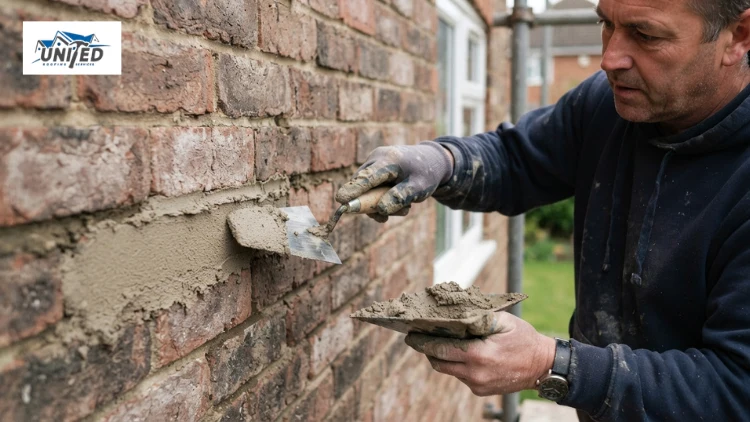
Repointing Cost Per Square Metre
The clearest way to compare quotes from different tradespeople is to look at the cost per square metre, since it removes the guesswork around how big your property actually is.
Cement Mortar Cost
Cement mortar is the standard choice for homes built from the 1930s onwards. It’s cheaper, quicker to apply, and widely available.
- Typical cost: £20 to £60 per m²
- London and the South East: often 15 to 35 per cent higher than the national average
Lime Mortar Cost
If your home was built before 1919, it was almost certainly built with lime mortar, not cement. This isn’t just a cosmetic detail. If your home was built before 1919, it was almost certainly built with lime mortar, not cement. Homes built between the wars (1919 to the 1930s) can go either way, so it’s worth having the existing mortar checked before any work starts. Historic England has identified unsuitable repointing, particularly hard cement mortar applied to soft, breathable brickwork, as one of the most common causes of damage to older buildings, since trapped moisture eventually forces bricks to flake and crumble.
- Lime mortar repointing cost: typically £55 to £100 per m²
- Specialist heritage lime (NHL) for listed buildings: often £100 to £200+ per m², reflecting the skill involved
Paying more for the correct mortar now is almost always cheaper than paying for brick damage later, since a repoint that fails to breathe properly often ends up costing more to put right than it saved.
| Material | Typical Cost per m² | Notes |
|---|---|---|
| Brick | £20 – £60 | Most common, quickest to point |
| Stone | £60 – £100 | Irregular joints, more skilled labour |
| Flint | £70+ | Specialist technique, less common outside chalk regions |
Cost Of Repointing A House - By Property Type
Once you scale up from a single wall to a whole property, the cost of repointing a house shifts quite a bit depending on how much brickwork is actually involved.
| Section | Typical Cost |
|---|---|
| Front elevation | £600 – £3,000 |
| Rear elevation | £600 – £2,500 |
| Gable end | £400 – £6,000 |
| Chimney | £400 – £1,500 |
What Affects Repointing Cost?
A few factors move the price more than people expect, and they're worth understanding before you start comparing quotes.
- Scaffolding and access: anything above ground floor typically needs scaffolding, often the single biggest addition to a quote, sometimes rivalling the repointing cost itself on smaller jobs
- Condition of existing mortar: soft, already-crumbling mortar is quicker and cheaper to remove than old, hard mortar needing careful mechanical raking
- Hidden repairs: damaged bricks or old paint/render often turn up once work starts, adding to the final bill
- Property age: older properties often need lime mortar, which affects both material cost and labour time
- Location: labour rates in London and the South East generally run 15 to 35 per cent higher than the UK average
- VAT: most repointing quotes are shown excluding VAT, which can add 20 per cent to the final invoice, so always confirm this before agreeing to a price
What Are The Signs Your Property Needs Repointing
Recognising early warning signs can help you catch the problem before it becomes a bigger, costlier repair.
- Mortar that crumbles or feels sandy when you scratch it with a fingernail
- Cracks running along the mortar joints
- Damp patches appearing on interior walls
- Gaps where mortar has fallen out completely
- White powdery deposits on brick faces, known as efflorescence
- Moss, algae, or small plants growing in the joints
If you're seeing damp patches indoors alongside any of these, it's worth reading our damp proofing guide too, since failed pointing is one of several possible causes and it helps to rule the others in or out.
How To Reduce Your Repointing Cost?
If a full repoint feels like more than your budget allows right now, there are still sensible ways to manage the cost. Get two or three quotes rather than accepting the first one.
- Get two or three quotes rather than accepting the first one
- Ask whether the quote is materials-only or supplied-and-fitted, since that's often the biggest reason two quotes for the same job look wildly different
- Time the work for spring or autumn, since cold weather can affect how well mortar cures and may mean redoing sections later
- Bundle repointing with other roofing or scaffolding work already planned, to share access costs.
- Consider targeted patch repointing for the worst-affected joints rather than a full wall, as a genuine short-term option that buys time
One shortcut worth avoiding: masonry paint or sealant applied directly over failing mortar. It might look tidier for a season or two, but it traps moisture rather than fixing the underlying gap, which tends to make the eventual repair more expensive, not less.
Get An Accurate Repointing Quote From United Roofing Services
Every property is different, and the only way to get a genuinely accurate number is to have someone inspect the actual brickwork, not plug numbers into a calculator.
United Roofing Services has been repointing homes across Richmond and the surrounding areas for over 45 years, covering everything from small patch repairs to full lime mortar repointing on period properties. Take a look at our repointing services in Richmond to learn more about how we approach this kind of work.
Get in touch today for a free, no-obligation quote.
Frequently Asked Questions
Why is repointing so expensive?
Labour, not materials, makes up most of the cost. Repointing is slow, skilled work that must be done carefully to avoid damaging the brickwork, and scaffolding often adds a big chunk.
How long does repointing last?
Cement mortar usually lasts 20 to 50 years, while lime mortar can last 30 to 100 years or more when done correctly on the right property.
Can I repoint in winter?
It's best avoided. Mortar needs stable temperatures above around 4°C to cure properly, so cold snaps and frost can weaken or ruin the work.
Does repointing need planning permission?
Not usually, since it counts as routine maintenance; the exception is listed buildings or conservation areas, where it's worth checking with your local planning authority first.
What's the difference between pointing and repointing?
Pointing is the mortar between bricks, and also describes the original process of filling joints during construction. Repointing is the process of removing old, deteriorated mortar and replacing it with fresh material. In practice, people often use the two terms interchangeably.
Does repointing add value to a house?
Yes, in most cases. Sound brickwork improves kerb appeal and reassures surveyors, while failed pointing identified during a homebuyer survey can reduce offers or delay a sale.
