
Damp is one of those problems that quietly gets worse the longer you ignore it. A small patch on a skirting board this year can turn into crumbling plaster, a musty smell that never quite goes away, and a repair bill that’s grown far bigger than it needed to be.
Damp proofing is the process of stopping moisture from getting into your walls, floors, and internal spaces in the first place, or treating it properly once it’s already there. It protects the structure of your home, your health, and the value of your property, and it’s something every homeowner in Richmond should understand, whether you’re dealing with a damp patch right now or want to know what to look out for.
What Is Damp Proofing, Exactly?
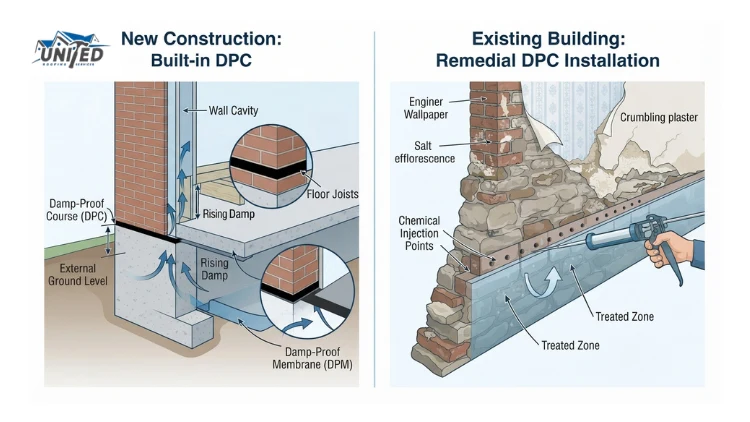
Damp proofing refers to the treatments and barriers used to stop moisture from passing into a building’s walls, floors, or internal structure. It’s usually built into a property when it’s constructed, in the form of a damp-proof course (DPC), but older properties or ones with a failed DPC often need it installed or repaired later on.
Think of it as a line of defence. Water is patient, and it will find a way in through a crack, a gap, or simply by soaking upward through brick like a wick, unless something stops it.
The Three Types Of Damp A DPC Protects Against
Not all damp is the same, and knowing which type you’re dealing with matters, because the fix differs each time.
- Rising damp happens when groundwater travels upward through brickwork by capillary action, usually because the damp proof course is missing, damaged, or has been bridged by raised flower beds or a driveway.
- Penetrating damp happens when water gets in sideways through cracked render, damaged brickwork, or a leaking roof detail. This is where roofing and damp proofing genuinely overlap.
- Condensation damp builds up when warm, moist air meets a cold surface, most often in bathrooms and kitchens with poor ventilation.
Why Does Damp Happen in the First Place?
Damp rarely appears out of nowhere. There’s almost always a cause, and it’s often something that’s been building up for months without anyone noticing.
Common causes include:
- A missing, damaged, or bridged damp-proof course
- Cracked render or deteriorating brickwork letting rain in
- Blocked or damaged guttering that lets water pool against the wall instead of draining away
- Damaged flashing around chimneys or roof valleys
- Poor ventilation in bathrooms and kitchens
- Condensation from everyday activities like drying laundry indoors
That gutter and flashing point is worth sitting with for a moment, because it’s the one most damp-proofing guides skip entirely. A blocked gutter doesn’t just overflow; it sends water running straight down an exterior wall every time it rains, which is a textbook way to trigger penetrating damp. Cracked or missing lead flashing around a chimney does the same thing from the roofline down. If you’re chasing a damp problem and the walls check out fine, it’s worth having your guttering and roof flashing checked before assuming the issue is purely the wall.
Why Your Property Actually Needs Damp Proofing
Protecting the Structure
Left untreated, moisture weakens plaster, rots timber, and can eventually affect brickwork and load-bearing elements. What starts as a cosmetic issue can become structural if left long enough.
Protecting Your Health
Damp environments create ideal conditions for mould, and mould spores in the air can trigger or worsen respiratory issues, allergies, and asthma, particularly in children and older adults. The NHS (National Health Service) notes that damp and mould in the home can affect health, especially for people with existing breathing conditions.
Protecting Property Value
Buyers and mortgage surveyors take damp seriously. A property with a documented damp problem can see offers pulled or reduced, while a home with a clean bill of health on damp tends to sell with far fewer complications.
How Do You Know If You Need Damp Proofing? (Signs to Watch For)
Some signs of damp are obvious. Others are easy to write off as nothing until the problem has already spread. Here are the ones worth noticing.
Early signs of damp to watch for:
- A musty, stale smell in a particular room
- Slightly cool or clammy patches on a wall
- Faint discolouration near skirting boards
- Condensation appearing regularly on windows
Alarming signs of damp that mean it’s time to act:
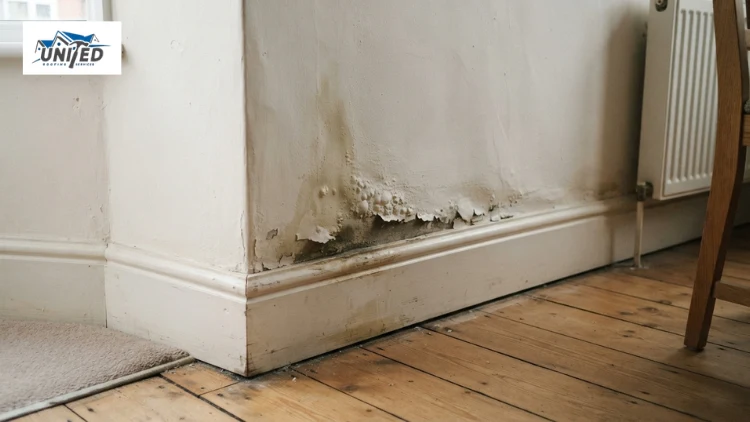
- Visible tide marks or staining low on internal walls
- Peeling paint or bubbling wallpaper
- Black mould spots, particularly in corners or behind furniture
- Crumbling plaster or white, powdery salt deposits on brick
- Warped skirting boards or timber
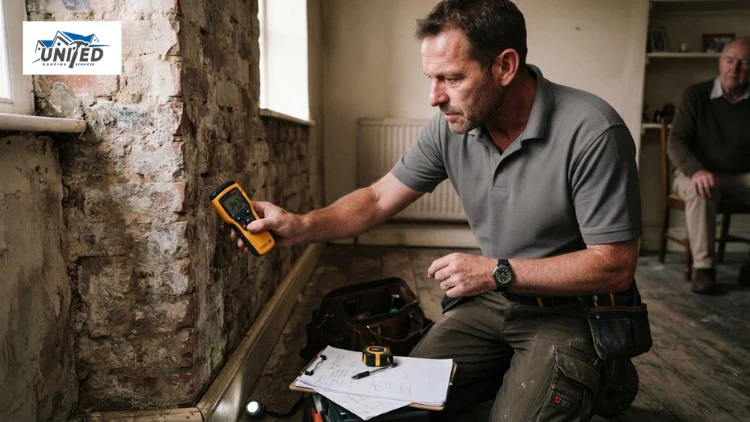
If you’re spotting signs of damp in houses you own or are considering buying, a proper damp inspection is the only way to know exactly what you’re dealing with rather than guessing.
If you’re noticing any of these signs, don’t wait for a small patch to turn into a bigger repair. Get in touch for a free damp survey, and we’ll tell you exactly what’s going on and what it’ll take to fix it properly.
How Damp Proofing Actually Works
Once we identify the type of damp, treatment usually follows one of a few routes, depending on the cause.
- Rising damp is treated by installing or repairing a damp-proof course, most commonly through a chemical injection into the brickwork.
- Penetrating damp is fixed by finding and sealing the entry point, which might mean repairing render, replacing damaged brickwork, or fixing the roofline detail that’s letting water in.
- Condensation damp is reduced through better ventilation, insulation upgrades, and sometimes extractor fans in problem rooms.
In every case, the plaster affected by rising or penetrating damp usually needs to be removed and replaced, since it can hold onto ground salts that keep drawing in moisture even after the underlying cause has been fixed.
For the full breakdown of treatments, our Damp Proofing service page covers each method in more depth.
How Much Does Damp Proofing Cost?
There’s no single figure that applies to every property, because the cost depends on the type of damp, how far it’s spread, and how much replastering or repair work is needed alongside the treatment itself.
A small, localised rising damp treatment will cost considerably less than a job involving multiple walls, extensive replastering, or basement waterproofing. The only accurate way to know the cost of damp-proof course work or a full damp treatment plan for your specific property is through a proper survey, which is why most reputable damp specialists, including us, offer this as a free first step rather than charging for a guess.
Damp Proofing Process With United Roofing Services
We follow a clear process for every property we treat in Richmond, so there are no surprises.
- Free Damp Survey – A specialist visits your property to identify the exact cause and type of damp.
- Tailored Treatment Plan – We design a plan based on your property’s construction and the damp found, not a generic fix.
- Clear, Written Quotation – You get a fixed price before any work starts.
- Professional Treatment – Industry-approved products and techniques, applied the first time properly.
- Aftercare & Local Support – We’re on hand afterwards for any follow-up questions.
Because our team handles issues like this across the whole property rather than in isolation, we can often spot the root cause of penetrating damp during the survey itself, rather than treating the symptoms while the real source keeps letting water in. This is one advantage of working with a team at United Roofing Services that looks at a property as a whole, not just one wall at a time.
Frequently Asked Questions
How long does damp proofing last?
A properly installed damp-proof course, applied correctly, typically comes with a guarantee of around ten years, though the materials themselves often perform well beyond that when installed by an experienced team.
Can I damp proof my house myself?
Surface treatments like damp-proof paint can mask minor issues temporarily, but they don’t address the underlying cause and can trap moisture further inside the wall. A qualified professional should install a proper damp-proof course.
Does damp proofing stop condensation?
Not directly. A damp-proof course deals with rising and penetrating damp. Condensation needs a different approach, focused on ventilation and reducing indoor humidity.
Will damp affect my chances of selling my house?
It can. Surveyors flag damp during mortgage valuations, and buyers often use it to negotiate the price down or walk away entirely, so treating it beforehand protects your sale.
How do I know if I have rising damp or penetrating damp?
Rising damp tends to appear as a tide mark low on the wall that doesn’t rise above roughly a metre, while penetrating damp can appear at any height and is usually linked to a specific external source like a crack, a leak, or a damaged roof detail.

Pingback: How Much Does Repointing Cost? The Complete UK Guide