
Choosing a roofing material can seem like a question of looks, but it’s really about cost, lifespan, and whether the material suits your roof’s pitch and your property’s period. Get it right, and the roof quietly does its job for decades. Get it wrong, and you’re looking at early repairs or a material that never suited the building.
This guide covers the different types of roofing materials available for homes in Richmond, both pitched and flat, with realistic costs and lifespans so you can compare properly before deciding.
Roofing Materials At a Glance
Here’s a quick comparison of the top roofing materials covered in this guide, useful if you already have a rough idea of what you’re looking for.
| Material | Best For | Typical Lifespan | Cost Range (per m²) | Maintenance |
|---|---|---|---|---|
| Natural Slate | Period and heritage properties | 80–100+ years | £90–£150 | Low |
| Clay Tiles | Traditional and character homes | 60–100 years | £60–£100 | Low |
| Concrete Tiles | Budget-conscious pitched roofs | 40–60 years | £35–£60 | Low |
| Metal Roofing | Modern builds, low-pitch roofs | 40–70 years | £70–£120 | Very Low |
| Felt | Sheds, garages, small flat roofs | 10–15 years | £40–£70 | Moderate |
| EPDM Rubber | Extensions, most flat roofs | 25–50 years | £70–£100 | Low |
| GRP Fibreglass | Balconies, flat roofs, terraces | 25–30 years | £80–£120 | Low |
Prices vary depending on roof size, access, and structural condition, so treat these as a general guide rather than a fixed quote.
Pitched Roof Materials
Pitched roofs cover most Richmond homes, from Victorian terraces to 1930s semis. The right material largely depends on roof pitch and whether the property sits in a conservation area.
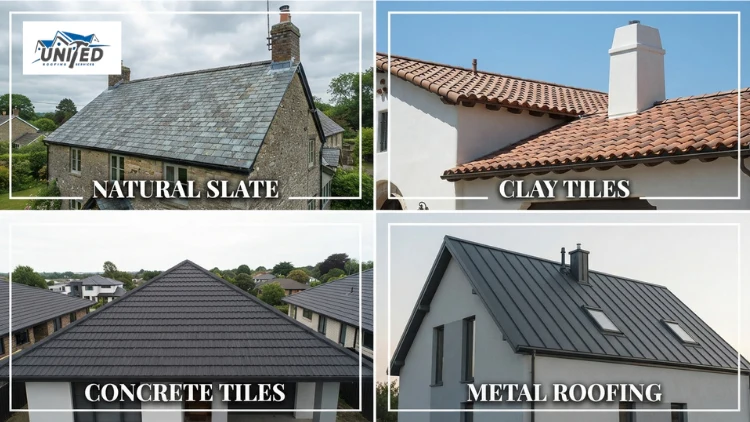
Natural Slate
Slate is the material most associated with period Richmond properties, and for good reason. It’s a naturally occurring stone that splits into thin, durable sheets, and a well-installed slate roof can genuinely outlast the person who fitted it.
- Exceptionally long lifespan, often 80 to 100 years or more
- Naturally resistant to fire, frost, and UV damage
- Matches the traditional character expected in many conservation areas
- Higher upfront cost than tiles, and repairs need a specialist who understands how to work with it
If your property is in a conservation area, slate is often the only option planning rules will allow for a visible roof slope, so this often decides the material for you rather than the other way around.
Clay and Concrete Tiles
Tiles are the most common pitched roofing material across the UK, and they split into two distinct types with quite different price points.
Clay tiles have been used on British roofs for centuries. They hold their colour well, resist frost better than concrete, and suit period and character properties without the cost of natural slate.
Concrete tiles are the more budget-friendly option. They’re heavier and slightly less refined in appearance, but they perform reliably and cost considerably less to install.
- Clay: 60- to 100-year lifespan, higher cost, better color retention
- Concrete: 40- to 60-year lifespan, lower cost, wider color and profile range
Metal Roofing
Metal roofing has grown in popularity for modern extensions and new builds, partly because it performs well on roofs with a shallower pitch than slate or tile typically allow.
- Lightweight compared to slate or tile, reducing structural load
- Long lifespan, often 40 to 70 years depending on the metal type
- Handles low-pitch roofs that tiles and slate can’t cover reliably
- Standing seam and profiled steel are the two most common systems used residentially
Metal roofing works particularly well where a property has a modern extension attached to a more traditional main house, since it can be installed without competing visually with the original roof.
Flat Roof Materials
Flat roofs are common on extensions, garages, and dormers across Richmond, and the material choice here matters just as much as it does for a pitched roof.
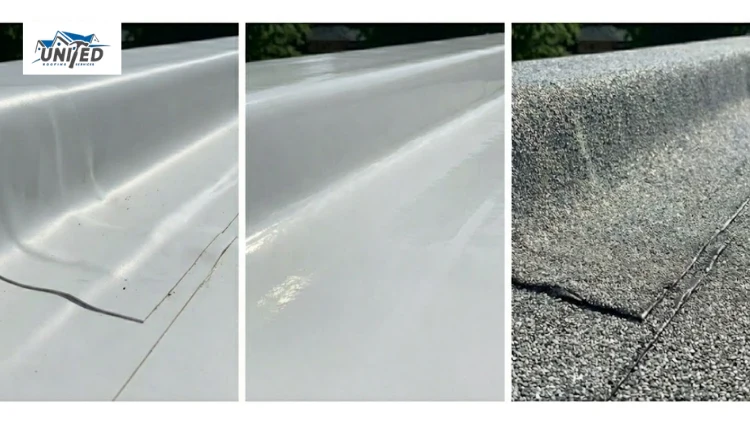
Felt
Felt has been the standard flat roofing material for decades, mainly because it’s the cheapest option to install.
- Lowest upfront cost of any flat roofing material
- Shortest lifespan, typically 10 to 15 years
- Suits sheds, garages, and other lower-priority structures
- Needs more frequent inspection than newer alternatives
EPDM Rubber
EPDM is a synthetic rubber membrane that has largely replaced felt as the go-to choice for house extensions.
- Installed as a single sheet with minimal seams, reducing leak points
- Flexible enough to handle structural movement without cracking
- Lifespan of 25 to 50 years with proper installation
- Straightforward to repair if it’s ever punctured
GRP Fibreglass
GRP, or glass-reinforced plastic, creates a completely seamless surface that’s popular for balconies and roof terraces as well as standard flat roofs.
- No seams at all, which removes the most common failure point in other flat roofing systems
- Highly resistant to foot traffic, useful for roof terraces and balconies
- Lifespan of 25 to 30 years
- Requires dry conditions during installation, so timing matters
Best Roofing Material for a Low-Pitch Roof
Roofs with a shallow pitch, generally anything under 15 to 20 degrees, rule out standard slate and tile, since water doesn’t run off fast enough to stop it working its way under the joints.
For a low-pitch roof, the realistic options are:
- Metal roofing: which sheds water effectively even at shallow angles and suits modern extensions
- Interlocking low-pitch tiles: a specific tile profile designed to work down to around 15 degrees
- A flat roofing system such as EPDM or GRP if the pitch drops below what even low-pitch tiles can handle
The right choice depends on the exact pitch and how the roof connects to the rest of the property, so confirm with a professional survey rather than guessing from the ground.
Best Roofing Material for a Flat Roof
For genuinely flat or near-flat roofs, EPDM rubber is generally the best all-round choice for most domestic properties. It balances cost, lifespan, and low maintenance better than felt or GRP for a typical extension or garage roof.
That said, the right answer depends on the specific job:
- Choose felt if the roof is low priority and budget is the main concern
- Choose EPDM for most standard extensions and general flat roof replacements
- Choose GRP if the roof will see regular foot traffic, such as a terrace or balcony
Whichever system fits your roof, proper flat roof installation comes down to correct falls and edge detailing, not just the material itself.
How to Choose the Right Roofing Material for Your Richmond Property
A few factors determine the right material more than personal preference.
- Roof pitch: Steep roofs suit slate and tile, shallow roofs need metal or low-pitch tiles, and flat roofs need a membrane system.
- Conservation area status: Much of Richmond falls within conservation areas, where planning rules often restrict visible roofing materials on a property’s street-facing side. Confirm this with Richmond Council or a heritage body such as Historic England before assuming you have free choice.
- Budget versus lifespan: A cheaper material installed now can cost more over 30 years than a pricier one that only needs replacing once in that time.
- Structural load: Older roof structures may not be built to carry the weight of natural slate or concrete tile without reinforcement, which is worth checking before committing to a material.
If you’re unsure how long your current roof has left, our guide to how long a roof lasts breaks down realistic lifespans by material in more detail.
How United Roofing Services Helps You Choose
United Roofing Services is a trusted roofing company in Richmond with over 25 years’ experience. We’ve fitted and repaired every material covered in this guide across Richmond, Twickenham, Esher, and Surbiton, so our recommendations are based on what suits your roof, not what one contractor happens to specialise in.
Whatever material is right for your roof, our Roof Installation services cover the full process, from supply through to fitting, for both new builds and complete replacements. We do installations ourselves rather than subcontracting. Get in touch for a free, no-obligation assessment if you’re not sure which material is right for your roof.
Frequently Asked Questions
What is the cheapest roofing material?
Felt is the cheapest flat roofing material, though its shorter lifespan means it can cost more over time than pricier alternatives. Concrete tiles are the most budget-friendly pitched roof option.
Can I use tiles on a flat roof?
No. Standard roof tiles rely on gravity and overlap to shed water, which only works on roofs with a minimum pitch. Flat and near-flat roofs need a continuous waterproof membrane such as felt, EPDM, or GRP instead.
Do I need planning permission to change my roofing material?
Usually not for like-for-like replacement, but if your property is in a conservation area or is listed, changing the material or its appearance can require permission. Check with the local planning authority before starting work.
How do I know my roof pitch?
You can get a rough visual estimate from the ground, but an accurate pitch reading requires proper measurement, which a roofing survey will confirm, along with which materials are suitable.
Is metal roofing suitable for a period property in Richmond?
It can work well on modern extensions attached to a period property. Still, it’s rarely appropriate for the main roof of a listed or conservation area building, where slate or clay tile is usually required to preserve the property’s character.

Pingback: Flat Roof Maintenance Tips for Richmond Homeowners (2026)
Pingback: What Are the Different Types of Roofs? Full Breakdown